

January 16, 2026
Predictive Analysis is changing how businesses make decisions. Whether you're trying to improve marketing campaigns or forecast inventory needs, this technology helps you make smarter choices using data. In this blog, you'll learn what predictive analytics is, how it works, and which techniques and tools are commonly used. We’ll also cover real-world examples, benefits, and how to get started with implementation.
Predictive analytics is a type of data analytics that uses historical data to predict future outcomes. It combines statistical models, machine learning, and artificial intelligence (AI) to find patterns and trends in data. Businesses use predictive analytics to make informed decisions, reduce risk, and improve performance.
At its core, predictive analytics involves building a predictive model using past data. These models can forecast customer behavior, identify potential equipment failures, or optimize marketing campaigns. Techniques include regression, decision trees, and neural networks. The goal is to make predictions that help you act before problems arise or opportunities are missed.

To understand how predictive analytics works, it helps to break down the common methods used. Here are some of the most effective techniques businesses rely on:
Regression models are used to understand relationships between variables. For example, you might use linear regression to predict sales based on advertising spend. It’s one of the simplest and most widely used predictive analytics techniques.
A decision tree breaks down data into branches that lead to specific outcomes. It’s easy to understand and helps identify which factors are most important in making a prediction.
Neural networks are inspired by the human brain and are great at recognizing complex patterns. They’re often used in AI applications like image recognition and fraud detection.
These models sort data into categories. For example, a classification model might predict whether a customer is likely to churn or stay.
Clustering groups similar data points together. It’s useful for customer segmentation, where you want to group users based on behavior or preferences.
This method looks at data over time to forecast future trends. It’s often used in financial forecasting or inventory planning.
These combine multiple models to improve accuracy. Techniques like random forests or boosting fall into this category.
Predictive analytics offers several advantages for growing businesses:
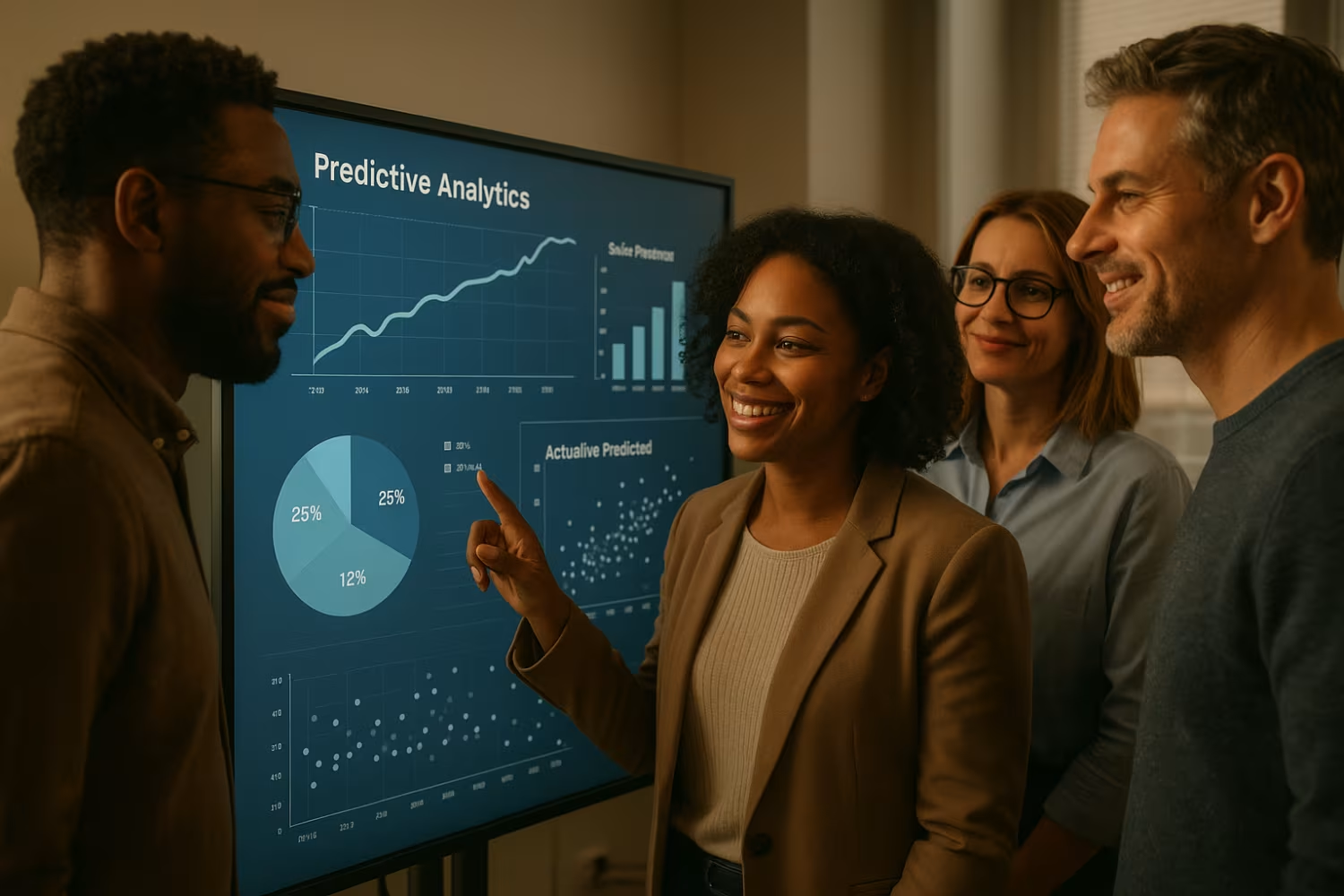
Predictive analytics tools make it easier to collect, process, and analyze large amounts of data. These platforms often include built-in algorithms, dashboards, and automation features. They allow teams to focus on insights rather than manual data crunching.
Some tools are designed for specific industries, while others are more general-purpose. The right tool depends on your goals, data sources, and technical skills. Many tools also integrate with existing systems like CRMs or ERPs, making adoption smoother.
Getting started with predictive analytics doesn’t have to be overwhelming. Here’s a step-by-step breakdown to guide your approach:
Start by identifying what you want to predict. It could be customer churn, sales trends, or equipment failure. A clear goal helps you focus your data efforts.
Gather historical data from relevant sources. Make sure it’s accurate and complete—dirty data leads to poor predictions.
Select a statistical model or machine learning algorithm that fits your goal. For example, use a regression model for continuous outcomes or a classification model for categories.
Split your data into training and testing sets. This helps you evaluate how well the model performs before using it in real situations.
Once the model is accurate, deploy it into your systems. Monitor its performance and update it as new data becomes available.
Use the model’s predictions to guide decisions. Whether it’s adjusting a marketing campaign or planning inventory, the value comes from taking action.

Before jumping in, consider data privacy and compliance requirements. Depending on your industry, you may need to follow specific rules when handling customer data. Make sure your team understands how to interpret model results and avoid bias.
You’ll also need the right mix of skills—data analysts, IT support, and business leaders should collaborate. Start small with a pilot project, then scale up as you gain confidence.
Follow these tips to get the most from your predictive analytics efforts:
A thoughtful approach helps ensure your predictive analytics project delivers real value.
Are you a business with 20 or more employees looking to improve decision-making with predictive analytics? If you're growing and need better ways to forecast, plan, and optimize, we can help you get started the right way.
At AlwaysOnIT, we provide the tools, support, and expertise to help you use predictive analytics effectively. From selecting the right models to integrating with your systems, our team ensures your data works for you. Let’s talk about how we can support your success.
An analytics technique commonly used in predictive analytics is regression, which helps identify relationships between variables. For example, linear regression can predict future sales based on past performance. Another technique is data mining, which uncovers hidden patterns in large datasets.
These techniques allow businesses to make predictions about future outcomes using historical data. By applying algorithms and statistical models, you can find trends that support better decision-making.
Predictive analytics techniques like classification models and neural networks help reduce guesswork. They analyze patterns in past data to make accurate forecasts. This is especially useful for marketing campaigns or demand planning.
Using a predictive model allows businesses to act proactively. For example, you can identify at-risk customers before they churn or spot equipment issues before they cause downtime.
AI enhances predictive analytics by automating complex tasks. It uses machine learning to improve model accuracy over time. Algorithms learn from new data, making predictions more reliable.
AI also helps process large volumes of data quickly. This is useful when working with multiple data sources or real-time updates. It’s especially effective in areas like fraud detection or customer behavior prediction.
Yes, many industries use predictive analytics. For example, retailers use it to forecast inventory needs. Healthcare providers use it to predict patient readmissions. Financial institutions use it to detect fraud.
These examples show how predictive analytics helps businesses make smarter decisions. By analyzing historical data, companies can predict future trends and act accordingly.
Predictive analytics is important because it helps businesses stay competitive. It allows you to make data-driven decisions instead of relying on intuition. This is critical when resources are limited.
By using predictive analytics, you can optimize operations, reduce costs, and improve customer satisfaction. It’s a smart way to plan for the future and avoid surprises.
Predictive analysis uses several types of data analytics, including descriptive, diagnostic, and prescriptive analytics. Each plays a role in understanding and acting on data.
Descriptive analytics shows what happened, diagnostic explains why, and predictive tells what might happen next. Together, they provide a full picture that supports better decision-making.
